Wednesday, March 27, 2013
Rock Hill City limits
I finished riding every road in the Rock Hill City limits two weeks ago. Dave Metzl from CN2 did a piece on it that made the news:

Thursday, January 19, 2012
The Perfect Assassin
Last night I had a dream that I was back at my alma mater, Columbia Bible College, or euphemistically, Columbia International University. I was walking across the back side of the campus toward the dorm I lived in when I was a student; I passed Ernie Taylor and gave him a high five, then some others wearing bright blue shirts with numbers on them, like they were dressed up for the north-south football game held every year (which, as I reflect, I realize I never attended in seven years at the school, usually because I was in the library). When I approached the road that heads toward the old faculty houses, I heard a siren go off and some gunshots on the opposite side of my old dorm. Somehow it was made known to me that there was a shooter on campus, and people were fleeing in every direction. I kept walking away from the campus toward the pointe, a promontory that overlooks the Broad River and the prisons on the other side. I think there was someone with me, and the road was a strange mix of how it was when I was in college, and how it is now, which is non-existent, because the ridge it was built on was bulldozed into the valley so apartments and athletic fields could be built.
Anyways, I was afraid to go back to the campus, though it seemed no one was fleeing in my direction. When I reached the overlook, I decided it would be safest to hide in the woods down the steep ravine towards the river. I noticed that the erosion on the rocky slope was worse than it was twelve years ago, so I descended carefully. When I got to the valley, my two roommates, Nathan and Thomas were there, along with one or two others that I couldn't identify. Strangely, the attacker showed up too, and we were for a time at a loss with what to do with him. Somehow we overpowered him, and the dream ended with my four friends each holding a limb as if we were about to quarter him, and I had him in a headlock.
I woke up and realized this was a vivid picture of my psyche on Monday and Tuesday. I'd spent most of both days doing biblical research for the ministers of the church plant I'm joining. I've been looking forward to the opportunity for a month or two since Andy mentioned the possibility to me. I jumped at the chance since I've been sensing a call back in the direction of my education for the past year. But by the end of the day Tuesday, I was quite discouraged, because I realized that the same weakness that so hindered me for years, and finally burned me out of pursuing biblical studies, was still very present and more powerful than my ability to resist. Like the shooter who violently invaded my college campus, it reared its head when I was a student, drove me away into solitude (only it was more often to the library than to the pointe), kept me working on a 100 page master's thesis for two and a half years (while others finished in six months), and crippled my efforts to teach high schoolers. What was it? Hyper-perfectionism and thoroughness bordering on obsessive compulsive disorder. I don't know how all the psychological tests I've taken for it have never given a positive result for OCD; anyone who reads even part of my thesis won't need a test to diagnose me. Not to mention the time records I kept of the entire 1000 day process, including tasks I did every time I worked. It came out to 1009 hours in 1010 days, if I remember correctly.
It's so frustrating, because it only comes out when I'm dealing with tasks or people I really care about, and it drives away the people and paralyzes me from efficient productivity in work, yet it compels me to be drawn to them too. Right now I'm discouraged by it, because I've so been looking forward to this work, and the report I finished tonight took me 25 hours when it should've taken me 5. If there's any encouragement at all, it's that for the past three days I did work with unusual resistance to external distraction. Now I just need to work on internal distraction and the controlling thought that it's never good enough. It's also good that right now I'm surrounded by people I can confide in and who want to help me overcome this tendency. Almost like our effort to quarter and strangle the assassin in my dream.
I heard this song as I finished writing; I thought it was fitting.
 |
| Aerial view of the Pointe |
I woke up and realized this was a vivid picture of my psyche on Monday and Tuesday. I'd spent most of both days doing biblical research for the ministers of the church plant I'm joining. I've been looking forward to the opportunity for a month or two since Andy mentioned the possibility to me. I jumped at the chance since I've been sensing a call back in the direction of my education for the past year. But by the end of the day Tuesday, I was quite discouraged, because I realized that the same weakness that so hindered me for years, and finally burned me out of pursuing biblical studies, was still very present and more powerful than my ability to resist. Like the shooter who violently invaded my college campus, it reared its head when I was a student, drove me away into solitude (only it was more often to the library than to the pointe), kept me working on a 100 page master's thesis for two and a half years (while others finished in six months), and crippled my efforts to teach high schoolers. What was it? Hyper-perfectionism and thoroughness bordering on obsessive compulsive disorder. I don't know how all the psychological tests I've taken for it have never given a positive result for OCD; anyone who reads even part of my thesis won't need a test to diagnose me. Not to mention the time records I kept of the entire 1000 day process, including tasks I did every time I worked. It came out to 1009 hours in 1010 days, if I remember correctly.
It's so frustrating, because it only comes out when I'm dealing with tasks or people I really care about, and it drives away the people and paralyzes me from efficient productivity in work, yet it compels me to be drawn to them too. Right now I'm discouraged by it, because I've so been looking forward to this work, and the report I finished tonight took me 25 hours when it should've taken me 5. If there's any encouragement at all, it's that for the past three days I did work with unusual resistance to external distraction. Now I just need to work on internal distraction and the controlling thought that it's never good enough. It's also good that right now I'm surrounded by people I can confide in and who want to help me overcome this tendency. Almost like our effort to quarter and strangle the assassin in my dream.
I heard this song as I finished writing; I thought it was fitting.
Friday, January 13, 2012
The Answer to the Double Rainbow Man's Question
Fascinated as I've been by astronomical and atmospheric phenomena this year, I've found a few wonderful sites online explaining some things I've seen, and some I never knew existed. Atmospheric optics is a treasure chest of knowledge. It was there that I first learned of the famous "double rainbow" youtube clip, and my life has never been the same since.
I love and laugh at his question, "what does this mean?" Our post-enlightenment reaction to this may tend toward scorn at his seemingly naive mystical view of nature, and though we do know much of how light reflects and refracts to produce the rainbow, the folks at atmospheric optics note, "Ray paths are something of a fiction and geometric optics is incapable of explaining many aspects of rainbows."
According to Scripture, God has assigned a meaning to rainbows, and they prompt his memory every time he sees them; that means every time they occur, which is more often than they are seen by humans. In fact, it is every time sunlight hits water droplets. This is because "all raindrops refract and reflect the sunlight in the same way, but only the light from some raindrops reaches the observer's eye" and "the rainbow is a collection of rays with particular directions, it does not otherwise exist and it is not located at any particular point in space." But God sees unseen rainbows, since his eyes are in every place (Pr 15:3; 2 Chron 16:9; Zech 4:10). What do these always visible rainbows prompt God to remember? He tells us:
I love and laugh at his question, "what does this mean?" Our post-enlightenment reaction to this may tend toward scorn at his seemingly naive mystical view of nature, and though we do know much of how light reflects and refracts to produce the rainbow, the folks at atmospheric optics note, "Ray paths are something of a fiction and geometric optics is incapable of explaining many aspects of rainbows."
According to Scripture, God has assigned a meaning to rainbows, and they prompt his memory every time he sees them; that means every time they occur, which is more often than they are seen by humans. In fact, it is every time sunlight hits water droplets. This is because "all raindrops refract and reflect the sunlight in the same way, but only the light from some raindrops reaches the observer's eye" and "the rainbow is a collection of rays with particular directions, it does not otherwise exist and it is not located at any particular point in space." But God sees unseen rainbows, since his eyes are in every place (Pr 15:3; 2 Chron 16:9; Zech 4:10). What do these always visible rainbows prompt God to remember? He tells us:
When I bring clouds over the earth and the bow is seen in the clouds, I will remember my covenant that is between me and you and every living creature of all flesh. And the waters shall never again become a flood to destroy all flesh. (Genesis 9:14-15)What's more, as Tim Keller proposes, the rainbow is a physical image of the gospel of Jesus Christ. No wonder then, that in apocalyptic visions of God and His anointed one, He is surrounded by a rainbow (Ezek 1:26-28; Rev 4:3; 10:1).
Wednesday, January 11, 2012
Φως `ιλαρον
On Christmas Day, I wrote about the beginnings of my pilgrimage toward a greater appreciation for the celebration of Christmas. I mentioned that the line of thought that gave me insight into the deeper significance of George Bailey's character, which I explained in my last post, eventually led me to realize how appropriate it is that we celebrate the birth of Jesus at the time of winter solstice.
Here's the roundabout version of how it happened: before I came to see the image of Christ in the story of It's a Wonderful Life, I discovered him while teaching through the stories of Elisha in 2 Kings, which are some of the most bizarre narratives in the whole Bible: floating axe heads, bears mauling boys, "death in the pot", and the like. The full explanation of that will have to wait until later, but suffice it to say that it opened up an entirely new perspective on the Old Testament and what is meant by "all the things concerning Jesus" (Lk 24:27) in the Scriptures. At about the same time, I began to expose myself to the teaching of Tim Keller, pastor of Redeemer Presbyterian in New York City. At first I found his approach to the Scriptures, in which he draws out of every text its supposed fulfillment in Jesus, artificial and forced, schooled as I was in conservative evangelical literalism that is highly suspicious of allegorical or spiritual approaches to Scripture. But the more I listened, the more I came to see the approach to be not only biblical, in that it put every text not just in its immediate literary context, but in its broader theological and redemptive context, but also extremely refreshing spiritually, in that it gave me a view of the colors and contours of the person and work of Christ, which view is the central spiritual act of the Christian life (2 Cor 3:18; Gal 3:1). Before long, I began to absorb from Keller the instinct I believe he caught from Jonathan Edwards of seeing all things in relation to divine truth and images or echoes of divine truth in all things. Keller does this well with psychological habits common in our culture and typical social interactions from the world of film and literature, which I suppose was the catalyst for my interpretation of It's a Wonderful Life. Gradually, other insights that came through this paradigm seemed to confirm it, often with poignant relevance to my immediate experience.
This year, after experiencing a personal spiritual awakening in January, I found myself increasingly transfixed with this vision of the Scriptures that sees foreshadowing, allusion, and images of Christ in the Old Testament. My father and I attended the national conference of the Gospel Coalition in April, which had as its theme "Preaching Christ in the Old Testament." I was hoping to learn more about the Christological approach to Scripture, but the conference was aimed at practitioners, and the closest it came to answering my questions was a panel discussion that shied away from an impasse, and a conversation with a rep from Westminster Seminary, who recommended the works of Geerhardus Vos. The panel reached an impasse over the question of whether we should preach the atonement from "Thou shalt not steal." I was hoping for some resolution, and though the discussion didn't offer it, God dumped an answer in my lap in my personal study later that day.
In hindsight, that was just the beginning; the type of insight God gave me that day seemed to run over into every area of life for the rest of the year. "Images of divine things" jumped out to me in the nature of light, odd providences such as sleep deprivation, a bear lurking around our vacation house, bike ride routes, Tour de France results, even signs passed on ride routes. I could go on, but if you want to see more, just go back through my blog for the past six months. There's been some form of this in just about all of the posts. It's led me to a firm persuasion that God speaks in types and images in Scripture and creation. I'm not the first one to think this; Jonathan Edwards writes
I'm inclined to make such a bold claim because I've seen it so many times this year. From a spectrum appearing on my ceiling while I read about electromagnetic waves to God getting my attention through conspicuous events revolving around bicycling, Scripture, numbers, and pancakes (those who know me well will appreciate the significance of those means to me), to a splinter hitting me in the eye while chopping logs to remind me of hypocrisy in my heart (see Matt. 7), to a real life parable of Jesus' return on May 21, to seeing crepuscular rays the night I met Dr. Ray :-), to this past weekend's trio of findings surrounding Epiphany: I found two fascinating books along this trajectory of an ontology of divine relationality; as I meditated with great profit on the rainbow signed covenant of Genesis 9, I saw a brilliant double halo around the moon all the way across the sky, and the next afternoon a rainbow; Sunday, two friends returned goodies I thought were permanently lost...it was truly a weekend of hidden things coming to light, and I went between laughing and crying for joy I was so stoked. Perhaps I could put my theory in Edwardsean terms: a divine and supernatural impression (or type/image?) immediately imparted to the soul by the providence and Spirit of God...whether it will be shown to be a Scriptural and rational doctrine remains to be seen. At this point, I have at least recorded it as a theorem in divinity, as Edwards would say.
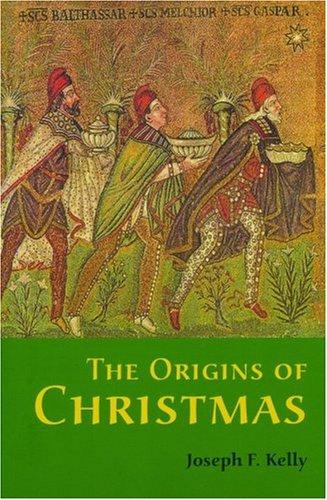
So what does all of this have to do with the observation of Christmas? Just this: that though the early Christians adopted the date of winter solstice for Christmas for symbolic reasons and to counter pagan feasts of Sol Invictus and Saturnalia, as the book pictured at right explains, they inadvertently timed Christmas perfectly, in my opinion. I mentioned in my last post that all the best Christmas movies feature a depressed person (e.g., Charlie Brown, Ebenezer Scrooge, George Bailey, etc.) transformed into joyful gratitude. Why do these resonate with us so deeply, and why is the alignment of Christmas with pagan rituals to the sun so fitting? Because just as daylight reverses its trend from shortening to lengthening on the solstice (or as ancient polytheistic pagans thought, the sun is "reborn"), bringing increased light and renewal of life to plants and animals and man alike, so at the birth of Jesus "the people who walked in darkness have seen a great light" (Is 9:2), "the sun of righteousness (rose) with healing in its wings" (Mal 4:2), and the life of Jesus is the "light of men" that "shines in the darkness, and the darkness has not overcome it" (Jn 1:4-5). As I see it, the celebration of Christ's birth belongs at the winter solstice not because that's when Jesus was born in the year, but because the year and its seasons are a microcosm of the history of the human race, and in view of the cosmic significance of the advent of Christ (e.g, Lk 2:13-14; Eph 3:9-10; Col 1:15-20), the birth of Jesus is the "winter solstice" of the entire cosmos.
Now that we're past the solstice and the days are growing, here are a few thoughts to close on what we're headed for both in the year and in the history of redemption:
Here's the roundabout version of how it happened: before I came to see the image of Christ in the story of It's a Wonderful Life, I discovered him while teaching through the stories of Elisha in 2 Kings, which are some of the most bizarre narratives in the whole Bible: floating axe heads, bears mauling boys, "death in the pot", and the like. The full explanation of that will have to wait until later, but suffice it to say that it opened up an entirely new perspective on the Old Testament and what is meant by "all the things concerning Jesus" (Lk 24:27) in the Scriptures. At about the same time, I began to expose myself to the teaching of Tim Keller, pastor of Redeemer Presbyterian in New York City. At first I found his approach to the Scriptures, in which he draws out of every text its supposed fulfillment in Jesus, artificial and forced, schooled as I was in conservative evangelical literalism that is highly suspicious of allegorical or spiritual approaches to Scripture. But the more I listened, the more I came to see the approach to be not only biblical, in that it put every text not just in its immediate literary context, but in its broader theological and redemptive context, but also extremely refreshing spiritually, in that it gave me a view of the colors and contours of the person and work of Christ, which view is the central spiritual act of the Christian life (2 Cor 3:18; Gal 3:1). Before long, I began to absorb from Keller the instinct I believe he caught from Jonathan Edwards of seeing all things in relation to divine truth and images or echoes of divine truth in all things. Keller does this well with psychological habits common in our culture and typical social interactions from the world of film and literature, which I suppose was the catalyst for my interpretation of It's a Wonderful Life. Gradually, other insights that came through this paradigm seemed to confirm it, often with poignant relevance to my immediate experience.
This year, after experiencing a personal spiritual awakening in January, I found myself increasingly transfixed with this vision of the Scriptures that sees foreshadowing, allusion, and images of Christ in the Old Testament. My father and I attended the national conference of the Gospel Coalition in April, which had as its theme "Preaching Christ in the Old Testament." I was hoping to learn more about the Christological approach to Scripture, but the conference was aimed at practitioners, and the closest it came to answering my questions was a panel discussion that shied away from an impasse, and a conversation with a rep from Westminster Seminary, who recommended the works of Geerhardus Vos. The panel reached an impasse over the question of whether we should preach the atonement from "Thou shalt not steal." I was hoping for some resolution, and though the discussion didn't offer it, God dumped an answer in my lap in my personal study later that day.
In hindsight, that was just the beginning; the type of insight God gave me that day seemed to run over into every area of life for the rest of the year. "Images of divine things" jumped out to me in the nature of light, odd providences such as sleep deprivation, a bear lurking around our vacation house, bike ride routes, Tour de France results, even signs passed on ride routes. I could go on, but if you want to see more, just go back through my blog for the past six months. There's been some form of this in just about all of the posts. It's led me to a firm persuasion that God speaks in types and images in Scripture and creation. I'm not the first one to think this; Jonathan Edwards writes
For indeed the whole outward creation, which is but the shadows of beings, is so made as to represent spiritual things. It might be demonstrated by the wonderful agreement in thousands of things, much of the same kind as is between the types of the Old Testament and their antitypes, and by spiritual things being so often and continually compared with them in the Word of God. And it's agreeable to God's wisdom that it should be so, that the inferior and shadowy parts of his works should be made to represent those things that are more real and excellent, spiritual and divine, to represent the things that immediately concern himself and the highest parts of his work. Spiritual things are the crown and glory, the head and soul, the very end and alpha and omega of all other works: what therefore can be more agreeable to wisdom, than that they should be so made as to shadow them forth?I have a theory that by His providence, God often makes people, objects, and events meaningful in this sense at a personal level. In this I go beyond Edwards, at least what I've read of him so far, which isn't much. But Edwards does see these things as a means of God's communicating with us:
And we know that this is according to God's method which his wisdom has chosen in other matters. Thus, the inferior dispensation of the gospel was all to shadow forth the highest and most excellent, which was its end; thus almost everything that was said or done that we have recorded in Scripture from Adam to Christ, was typical of gospel things: persons were typical persons, their actions were typical actions, the cities were typical cities, the nation of the Jews and other nations were typical nations, the land was a typical land, God's providences towards them were typical providences, their worship was typical worship, their houses were typical houses, their magistrates typical magistrates, their clothes typical clothes, and indeed the world was a typical world. And this is God's manner, to make inferior things shadows of the superior and most excellent, outward things shadows of spiritual, and all other things shadows of those things that are the end of all things and the crown of all things. Thus God glorifies himself and instructs the minds that he has made. ("Miscellanies" no. 362)
If we look on these shadows of divine things as the voice of God, purposely, by them, teaching us these and those spiritual and divine things, to show of what excellent advantage it will be, how agreeably and clearly it will tend to convey instruction to our minds, and to impress things on the mind, and to affect the mind. By that we may as it were hear God speaking to us. Wherever we are and whatever we are about, we may see divine things excellently represented and held forth, and it will abundantly tend to confirm the Scriptures, for there is an excellent agreement between these things and the Holy Scriptures. (Images of Divine Things, no. 70)
 |
| No way! |
 |
| Unbelievable! |
 |
| ευρηκα! |
Now that we're past the solstice and the days are growing, here are a few thoughts to close on what we're headed for both in the year and in the history of redemption:
The changes that pass on the face of the earth by the gradual approach of the sun is a remarkable type of what will come to pass in the visible church of God and world of mankind, in the approach of the church's latter-day glory. The latter will be gradual, as the former is. The light and warmth of the sun in the former is often interrupted by returns of clouds and cold, and the fruits of the earth kept back from a too-sudden growth, and a too-quick transition from their dead state in winter to their summer's glory, which in the end would be hurtful to them and would kill them. So it is in the spiritual world. If there should be such warm weather constantly without interruption, as we have sometimes in February, March and April, the fruits of the earth would flourish mightily for a little while, but would not be prepared for the summer's heat, but that would kill 'em. This is typical of what is true concerning the church of God, and particular souls. The earth being stripped of its white winter garments, in which all looked clean but all was dead, and the making of it so dirty, as it is early in the spring, in order to fit it for more beautiful clothing in a living state in summer, is also typical of what passes in the spiritual change of the world, and also, a particular soul. The surface of the earth is as it were dissolved in the spring. The ground is loosened and broke up, and softened with moisture, and its filthiness never so much appears as then; and then is the most windy turbulent season of all. (Edwards, Images of Divine Things, no. 152)Though we're in January, on a bigger scale we're already into the spring, and looking forward to the summer day that will never end:
The sands of time are sinking,
The dawn of heaven breaks;
The summer morn I’ve sighed for -
The fair, sweet morn awakes:
Dark, dark had been the midnight
But dayspring is at hand,
And glory, glory dwelleth
In Emmanuel’s land.
-Anne Cousin
Saturday, December 31, 2011
The Gospel According to George Bailey
 |
| George learns he won't be leaving Bedford Falls after all |
 |
| Apparently he doesn't know about lung health |
 |
| "I lost the money." |
For some readers, this perspective on the plot probably makes clear what I'm seeing in the film. Some may think I'm just an over-imaginative Christian who listens to too many Tim Keller sermons. That's probably true, but the parallels in this story with the suffering, death, and resurrection of Christ are quite remarkable. Consider several points of similarity:
- Jesus referred ultimately to himself in John 15:13, and the rest of Scripture bears abundant witness to the selfless love of Jesus in his offering himself for our sins (Jn 3:16; Rom 5:7-8; Eph 5:2; 1 Jn 4:9-10)
- As George always sacrifices for his father's business, Jesus sought his Father's honor and will in everything he did in life and death (Mt 26:39; Jn 5:19, 23; 6:38; 17:4)
- As George continually fights against and resists Mr. Potter's evil schemes, so Jesus did battle with the devil in his temptation and works (Mt 4:1-11; Lk 10:18; Jn 16:11; Heb 2:14; 1 Jn 3:8)
- As George takes the blame for the lost money before Potter, so Jesus "bore the iniquity of many" (Is 53:5-6, 10-12) and prayed for the forgiveness of those who crucified him (Lk 23:34).
 |
| George's Gethsemane |
- As George, hunched over a drink and drenched in sweat, prays to the Father for help and is answered with a punch in the face, so Jesus in his agony cried out to the Father "take this cup from me" as "his sweat became like great drops of blood falling to the ground," and immediately afterward he was met by Judas and the soldiers who arrested him (Lk 22:41-54).
- As George helps others even as he is "dying" (his dive to save Clarence, his thought that everyone would be better off if he'd never been born, his concern for all those he loved when he was in Pottersville), so Jesus looked in pity on others as he died the most pitiable death (Lk 23:28, 34, 43; Jn 19:26-27)
- As George temporarily enters the degenerate Pottersville, the world in which he was never born, so Jesus, according to the apostles' creed, "descended into hell" after his crucifixion (Eph 4:9-10; 1 Pet 3:18-19; this point is disputed by theologians. See articles by Grudem and Scaer).
- As George's despair and "death" are his greatest defeat from Potter but also his greatest triumph, so Jesus' agony and crucifixion are his greatest defeat at the hands of the devil, but also his triumph over the devil (Gen 3:15; Lk 22:3; Jn 12:31; 13:2, 27; 16:11; Col 2:15; Heb 2:14).
- As George, after his restoration to life, returns home first (except for the authorities and his children--not sure how they fit in yet) and was followed by all the people for whom he sacrificed, who return to him all the gifts he'd first given to them, after which his brother rightly proposes a toast to "my big brother George, the richest man in town," so Jesus is described as the "the beginning, the firstborn from the dead" (Col 1:18; cf. 1 Cor 15:20-24) who ascended, "receiving gifts among men" (Ps. 68:18; and giving them, cf. Eph 4:7-12), so that in his triumph he "divides the spoil with the strong" (Is 53:12) and receives supremacy over all things (Mt 28:18; Eph 1:20-23; Php 2:9; Col 1:18; 2:10; Heb 1:4).
- Though she's his wife in the film, Mary is the steady heroine of the story, and her odd position in the final scene, standing on a chair, hands folded in a saintly pose, asks for commentary from my Catholic brethren. Probably also the part about George lassoing the moon so she can eat it and moonbeams can come out of her hair and fingers and toes. I'm Protestant and don't know about that stuff because it ain't in the Bible. :-)
The question that remains is whether these things written in by the filmmakers, or can someone who knows the Bible well enough read the gospel into anything? The latter might be true, but in this case, I think the former is more accurate. Here are a few subtle but concrete details of the movie that make me think the writers intended the story to be a picture of the gospel:
- The slum owned by Mr. Potter is called "Potter's Field." This is the name of the plot of ground Judas purchased with the money he received for betraying Jesus, where he also hanged himself (Mt 27:3-10; Acts 1:18-19).
- Though their roles in the story are not exactly parallel, there are characters named Mary, Joseph, and Peter.
- As the angels converse in the beginning of the movie, they say about the night of George's wishing he'd never been born, "tonight's his crucial night." Interesting in this perspective.
- As George talks to his dad at the dinner table the night he has the stroke while George is at the dance, Peter tells him "George, you were born older." He means that George has always fit the role of older brother, but if George is a Christ figure, this might allude to Micah 5:2, the prophecy of Messiah's birth in Bethlehem: "But you, O Bethlehem...from you shall come forth for me one who is to be ruler in Israel, whose coming forth is from of old, from ancient days."
- Perhaps the clearest indication of the Christological nature of the story are the presence of "O Come, All Ye Faithful" in the opening scene, as George's friends pray for him, and the singing of "Hark! The Herald Angels Sing" in the closing scene. In traditional Christmas Eve services, these are the opening and closing carols.
- As they sing the closing carol, something very significant happens as they sing the words "God and sinners reconciled..." If you want to know what it is, you'll have to watch the movie again. You wouldn't want me to give it all away, would you?
 |
| Seven Swans a-swimming |
This is not the end of the story of my adoption of the celebration of Christmas, but it gets at the question I'll try to answer next time: why do all the best-loved Christmas movies and television specials feature a grumpy, ungrateful, or angry person who is delivered into gratitude and rejoicing? Since Charlie Brown is the only one of these I'm thinking of that is set after 1960, only Charles Schultz uses the contemporary term "depressed." But the theme is the same from A Christmas Carol to It's a Wonderful Life to Miracle on 34th Street to A Charlie Brown Christmas to A Christmas Story (even the old man finally smiles when the duck smiles at him before being decapitated in the Chinese restaurant). The answer to this question leads to the reason why I think it's so fitting that we remember the birth of Jesus Christ at this time of year. Merry Seventh Day of Christmas!
Thursday, December 29, 2011
Dead Preachers Society: Session 3 Notes
I'm meeting with some friends to read Jonathan Edwards' typological writings, vol. 11 of the Yale Edition of his works. I decided I'd post my notes on our last meeting and some additional thoughts from the reading here in case anyone finds them interesting. This was originally an email to the group.
Ray, Andy, Daniel, and I discussed pp. 50-93 of Edwards' vol. 11. I asked why Edwards saw shadows of spiritual truth in the created world, and whether he saw this perspective as necessary. We all noted that the inspired biblical authors saw things this way, and that the Scriptures are not exhaustive, but rather a springboard to understand everything as designed by God to communicate truth to our minds. Ray noted that Edwards was mindful of God in the theater of nature, and Andy mentioned how he found Edwards a good balance to his reaction against over-spiritualization (a reaction we've probably all had to the excess of "God moments" zealous naivete often sees).
I asked which examples of Edwards were particularly compelling. Several favorites were the jealous love of a husband as particularly reflective of the love of Christ for the church (no. 32), the customs of triumphant Roman armies as a picture of Christ's triumphant entry into heaven (no. 81), and the height of the heavens above the earth that shows the surpassing worth of heavenly pleasures compared to earthly ones. Daniel, Andy, and Ray commented that Edwards extended the the Reformed understanding of the sacraments to all of creation...small "s" sacraments, that is. I sat and learned.
Andy admitted he was challenged to greater wakefulness by Edwards' example; as professional religious people, we're often like Eli with Hannah, Zechariah (father of John the Baptist) with the angel in the temple, and the woman in prayer with Peter at the gate in Acts. Did someone mention Mary and Martha with Jesus, too? I.e., we're so caught up in our habitual service that we become myopic and miss the presence and works of God that are right in front of us. Ray said the three of them should write sermons on those texts and "take this on the road". I'd go to that revival.
I'll apply that by confessing that as we discussed these things, I was distracted by three things I was trying to do, all Martha-like: finish the reading (it was only 2 pages, but still...), write out some good questions for discussion, and take notes on what was being said. If Edwards had been with us, he'd have said that my distraction was a type of the very thing we were discussing: I was distracted from the grace of exchanging ideas by my anxiety to make sure I had all my ideas organized for the exchange. I'm not sure what he'd say about the fact that I was delayed to the meeting because I lost my wallet at my sister's house in Charleston; I'd actually put it in my travel kit so I wouldn't lose it...we should come up with a name for this phenomenon. How about "perfectionistic irony"? I for one am persuaded that God often speaks in this manner providentially, that he accompanies insight into his written word with corresponding illustrations, often in our immediate circumstances. I mentioned the presence of a deer in the grocery store a few weeks back when I'd been pondering "I adjure you by the gazelles or does of the field..." in Song of Songs.
Okay, this is no longer brief. Daniel asked if Edwards presupposed or predicted Van Tilian presuppositionalism. Ray mentioned that for communists, looking at the material world often broke them of their atheism.
Definitely some good trajectories of thought to explore further. Here are some others that I had in mind that the river of our collective thoughts avoided:
1. Is Edwards correct in thinking this way? Why/not? Edwards may be the father of American Evangelicalism, but he's not our pope, so let's think critically about his ideas. Maybe we can do this by picking the example that made us laugh the loudest as we read.
2. Edwards mentions in no. 95 that the cursing of the serpent in crawling in the dust represents the curse on the devil, and thus "proves that outward things are ordered as they be, to that end that they might be images of spiritual things" (88). This raises some questions of enormous importance in my mind...If the serpent and devil in Gen 3 are an example of type and antitype conjoining, is there a pattern or rule to when type and antitype conjoin in Scripture? (Edwards also mentions the sunrise/set with the death and resurrection of Christ, pp. 64-65, no. 50, nt. 2. maybe others too). Also, is everything in Eden typical and sacramental? It seems at least the trees, the serpent, Adam's sin, and Adam and Eve's nakedness are. That is, they're both literal and representing deeper spiritual things. Or perhaps in Eden there was a kind of hyper-typical nature to all of these things, so that what we perceive as "types" of spiritual things actually were (pre-fall) the very things they would later typify. Curious in this light and in view of Edwards' thoughts on rivers (p. 77, no. 77, which numbers seem to typify the perfection of the analogy of God's providence) is the fact that the river out of Eden splits into four rivers typical of God's presence as the fountain of life before the fall (as opposed to rivers joining and flowing into the sea/streams of providence joining to flow into God after the fall)? Just a thought, but if that is true, are the trees and river and etc. in the new heavens and earth also restored to their (hyper?) typical/sacramental nature? Does this get at the "groaning" of creation subject to futility in Romans 8? I.e., is the futility, in part, that it no longer bears this sacramental nature?
Also interesting in this connection are the mention of Jesus' side as proof to Thomas and his breathing on them in Jn 20, in light of God's creation of man by breathing into his nostrils, and woman from the side of man. Edwards p. 70-71, nos. 62-63 got me thinking this way.
3. p. 57, no. 26, Edwards says of Jesus' use of a tree known by its fruit as "not merely mentioned as illustrations of his meaning, but as illustrations and evidences of the truth of what he says" (emphasis mine). Are there other examples of this in Scripture? No. 7 seems to be similar re: 1 Cor 15:36
4. page 74, no. 70, By types in creation "we may as it were hear God speaking to us." Should we then follow Edwards' lead as a kind of spiritual discipline? In light of no. 77, the river as God's providence, what is typified by a tree planted by streams of water (Ps. 1)? Does day and night meditation on the word lead to a greater connection to the streams of providence in our lives, so that we do truly see correlation between peculiar turns of providence and objective truth we see in the word, and thus hear God speaking to us, as Edwards says?
5. page 80, no. 78: the course of sap/life in trees is reverse of the flow of water in rivers, which represents the providence of God in the church in giving life through the trunk of Christ. Edwards doesn't mention my thought from point 4 above, but could it be that the church is a macro-example of what we are to be individually? I.e., specially favored by providence (cf. Eph 1, called according to his purpose who works all things...) to hear God speaking in Christ and Scripture, and for the word we hear to correspond with the collective force of God's word to us in everything we've experienced. That thought needs better words.
6. page 85, no. 85: sunrise as both resurrection and the Gospel dispensation. What then of multiple senses applied to one object? So too seas/lakes are God's wrath (nos. 27, 64), and in relation to rivers, God himself (no. 77). What up with that?
Monday, December 26, 2011
The Light Shines in the Darkness...
In my more puritanical days, I was at best ambivalent about the observation of Christmas on December 25, and at worst cynical. This was because, in all likelihood, Jesus was not born on December 25. In addition, many of the traditions now associated with the observation of Christmas have pagan origins, and those whom I looked to as theological forebears were opposed to Catholic holy days. Charles Spurgeon expresses this view well in the first half of this paragraph from a sermon preached December 23, 1855:
For a few years in the early 2000s, though I didn't spread tidings of "Bah! Humbug!", I was rather stoic about the remembrance of Jesus' birth on December 25. Nevertheless, or perhaps because of this, I was intrigued to study the origins of Christmas. My interest in astronomy already made me an observer of equinoxes and solstices, first in choosing those dates to cut my hair or shave my beard, and later with solstice parties, especially the winter solstice. For several years at Christmas I had a fascination with astronomical theories about the star of Bethlehem. I was glad to find that several professional astronomers had researched the matter and proposed plausible theories. As I remember now, the best book I read on the matter concluded that it was a conjunction of several planets in a constellation that was somehow associated with the Jewish nation. It was Mark Kidger's The Star of Bethlehem: An Astronomer's View; I also read some of Michael Molnar's The Star of Bethlehem. I don't recall if I finished either of the books, as is my custom, but they were both great reads. Recently I came across a more thorough explanation of the "signs in the heavens" surrounding both the birth and death of Jesus. Rick Larson, who is a doctor by profession and an amateur astronomer, makes a compelling case:
My former practice at solstice parties was to show It's A Wonderful Life. When my first attempt to show the film at a solstice party in Rock Hill was overruled in favor of a Jim Carrey slapstick, I decided maybe I'm the only one who cares to celebrate the solstice, or watch sappy Jimmy Stewart movies, or maybe both. So after 2005, I observed the solstice and watched my favorite movie alone, which probably saved me from a good deal of embarrassment since I tend to tear up a few dozen times every time I watch it. In spite of this, it's not a good movie to watch alone, because it concludes with a message that "no man is a failure who has friends." What a letdown. After identifying so much with George Bailey, the frustrated idealist who never gets to pursue his dreams, I looked around at the end of the movie and felt like I had no friends. But in the darkness of self-pity I started to ask questions, and that's when light dawned on a much deeper significance to George Bailey's character. Not only that, but pursuing that line of thought has led me to a new understanding of the significance of this time of year that persuades me that we should celebrate the birth of Christ on December 25. That will have to wait for another post; for now I'll let you laugh at my hokey tastes in film.
This is the season of the year when, whether we wish it or not, we are compelled to think of the birth of Christ. I hold it to be one of the greatest absurdities under heaven to think that there is any religion in keeping Christmas-day. There are no probabilities whatever that our Saviour Jesus Christ was born on that day, and the observance of it is purely of Popish origin; doubtless those who areThis view is not without biblical warrant either, depending on how we interpret texts such as these:
Catholics have a right to hallow it, but I do not see how consistent Protestants can account it in the least sacred. However, I wish there were ten or a dozen Christmas-days in the year; for there is work enough in the world, and a little more rest would not hurt labouring people. Christmas-day is really a boon to us; particularly as it enables us to assemble round the family hearth and meet our friends once more. Still, although we do not fall exactly in the track of other people, I see no harm in thinking of the incarnation and birth of the Lord Jesus. (emphasis mine. HT: Tim Challies)

Therefore let no one pass judgment on you in questions of food and drink, or with regard to a festival or a new moon or a Sabbath. These are a shadow of the things to come, but the substance belongs to Christ. (Colossians 2:16-17)
But now that you have come to know God, or rather to be known by God, how can you turn back again to the weak and worthless elementary principles of the world, whose slaves you want to be once more? You observe days and months and seasons and years! I am afraid I may have labored over you in vain. (Galatians 4:9-11)
 |
| presenting the treasures of Kidger's book, Christmas 2004 |
My former practice at solstice parties was to show It's A Wonderful Life. When my first attempt to show the film at a solstice party in Rock Hill was overruled in favor of a Jim Carrey slapstick, I decided maybe I'm the only one who cares to celebrate the solstice, or watch sappy Jimmy Stewart movies, or maybe both. So after 2005, I observed the solstice and watched my favorite movie alone, which probably saved me from a good deal of embarrassment since I tend to tear up a few dozen times every time I watch it. In spite of this, it's not a good movie to watch alone, because it concludes with a message that "no man is a failure who has friends." What a letdown. After identifying so much with George Bailey, the frustrated idealist who never gets to pursue his dreams, I looked around at the end of the movie and felt like I had no friends. But in the darkness of self-pity I started to ask questions, and that's when light dawned on a much deeper significance to George Bailey's character. Not only that, but pursuing that line of thought has led me to a new understanding of the significance of this time of year that persuades me that we should celebrate the birth of Christ on December 25. That will have to wait for another post; for now I'll let you laugh at my hokey tastes in film.
Saturday, December 10, 2011
A Broken Record
As the calendar goes, yesterday I was a third of a century old. It was a typical day I suppose. While packing a box with newspaper at work, I came across Peggy Noonan's column from the April 30 Wall Street Journal: "Make John Paul II a Saint". I was intrigued that he was laid to rest April 8, 2005, which by the calendar was exactly 6 and 2/3 years ago. Speaking of 33 and 1/3, I'm turning into a broken record with all my talk about threes, but I figure this would be a good time to finish my thoughts on the significance of the number three as it's been repeatedly brought to my attention this year. I feel like I'm giving an academic lecture on an episode of Sesame Street. Maybe so. I'm just trying to understand and explain what I've seen. My understanding is based on the belief that God is both infinite and personal, and that He has spoken and continues to speak. He's spoken primarily and most clearly in His Son as He is presented in Scripture, but He also speaks continually, though not as definitively, through creation and providence and conscience. Apparently God has given me the ability (or handicap, depending on which way I look at it) to spatially perceive numbers, dates, and many quantifiable aspects of reality, and it seems He's chosen to speak to me through them of late.
What's He saying? I don't know, but I have theories. Most generally, it seems the number three in some sense reflects the nature of God, in that He exists eternally in three distinct persons who are nevertheless of one being or substance. The Trinity is a mystery that can't be fully grasped by finite human minds, and there's no adequate analogy we can devise to illustrate Him. But it seems to me that the nature of the number three, while not illustrating the Trinity, correlates with God's triune nature in peculiar ways. First, the nature of a third: it is an endlessly repeating number (.3333...) in which each digit calls attention to the nature of the whole from which it came. Each of the three parts is an endless string of "threeness", if you will. To be clear, the Father, Son, and Spirit are not "parts" of God; the one essence of God is not divided between the three persons. But the correlation between thirds and the nature of the Trinity lies in their infinity: at no point could the decimal end or change to a two or four and still be a third; and in their reflection of the whole: just as the Father, Son, and Spirit eternally glorify each other, so each of these thirds endlessly "glorifies" the "threeness" of the whole.
Of course, this only works in base ten, and that we use base ten is only due to the fact that we "happen" to have ten fingers and ten toes. Perhaps, but interesting things also happen in other bases: 1/3 in binary, which would be expressed 1/11, equals .010101...; in base 3, .1; in base 4, .11111... (link shows 1/4+1/16+1/64+1/256+1/1024, which are the base ten equivalents of the first five decimal places in base four); in base 5, .131313...; in base 6, .2; in base 7, .22222...; in base 8, .252525...; in base 9, .3. A question that I'm curious to investigate is whether there is any integer n less than 10 such that 1/n in any base yields a value of .nnnnnn.... I'm thinking there's not, but I'm not sure. My brain is starting to hurt. All of this makes me want to study number theory, but only a little. And I'm glad that we all have ten fingers.
More specifically, it seems that God has spoken through the conspicuous appearance of threes to alert me to His providential guidance of my life. In my post summarizing the odd numeric occurrences, I forgot to mention how clearly I was reminded of this the day after my accident in September. When my friend Noreen had a very serious accident in June, I mentioned the comfort for riding on dangerous roads I find in the truth expressed in the Heidelberg Catechism:
What's He saying? I don't know, but I have theories. Most generally, it seems the number three in some sense reflects the nature of God, in that He exists eternally in three distinct persons who are nevertheless of one being or substance. The Trinity is a mystery that can't be fully grasped by finite human minds, and there's no adequate analogy we can devise to illustrate Him. But it seems to me that the nature of the number three, while not illustrating the Trinity, correlates with God's triune nature in peculiar ways. First, the nature of a third: it is an endlessly repeating number (.3333...) in which each digit calls attention to the nature of the whole from which it came. Each of the three parts is an endless string of "threeness", if you will. To be clear, the Father, Son, and Spirit are not "parts" of God; the one essence of God is not divided between the three persons. But the correlation between thirds and the nature of the Trinity lies in their infinity: at no point could the decimal end or change to a two or four and still be a third; and in their reflection of the whole: just as the Father, Son, and Spirit eternally glorify each other, so each of these thirds endlessly "glorifies" the "threeness" of the whole.
Of course, this only works in base ten, and that we use base ten is only due to the fact that we "happen" to have ten fingers and ten toes. Perhaps, but interesting things also happen in other bases: 1/3 in binary, which would be expressed 1/11, equals .010101...; in base 3, .1; in base 4, .11111... (link shows 1/4+1/16+1/64+1/256+1/1024, which are the base ten equivalents of the first five decimal places in base four); in base 5, .131313...; in base 6, .2; in base 7, .22222...; in base 8, .252525...; in base 9, .3. A question that I'm curious to investigate is whether there is any integer n less than 10 such that 1/n in any base yields a value of .nnnnnn.... I'm thinking there's not, but I'm not sure. My brain is starting to hurt. All of this makes me want to study number theory, but only a little. And I'm glad that we all have ten fingers.
More specifically, it seems that God has spoken through the conspicuous appearance of threes to alert me to His providential guidance of my life. In my post summarizing the odd numeric occurrences, I forgot to mention how clearly I was reminded of this the day after my accident in September. When my friend Noreen had a very serious accident in June, I mentioned the comfort for riding on dangerous roads I find in the truth expressed in the Heidelberg Catechism:
1. Q. What is your only comfort in life and death?A. That I, with body and soul, both in life and death, am not my own, but belong unto my faithful Savior Jesus Christ; who with his precious blood has fully satisfied for all my sins, and delivered me from all the power of the devil; and so preserves me that without the will of my heavenly Father not a hair can fall from my head; yea, that all things must be subservient to my salvation, wherefore by his Holy Spirit he also assures me of eternal life, and makes me heartily willing and ready, henceforth, to live unto him.
It was no small comfort to me on Sunday, September 11, when we read this confession of faith as I was still stiff and sore from the previous day's wreck. I believed that truth in June, but in September I saw it. And it seemed clear that my frustrations that culminated in the accident were a pattern of providence calling me to focus on other things, particularly whether my interest in theology and biblical studies was to become a vocation again rather than just a hobby.
Until now I've not written about another theme that's been intertwined with the conspicuous numbers. What I didn't say before about my contract negotiation with Paul over pancakes was that I was distracted the whole time we talked by insights I wanted to share from the Old Testament. I couldn't stop talking about Elisha and Isaac as types of Jesus; the fact that he was buying me a bike was relatively boring news. About six months later, I returned to the same IHOP and sat across from Dick Belcher of RTS to learn about doctoral studies at Westminster Theological Seminary. During our conversation, into the restaurant walked Denis Regan, who in November 2007 bought a Litespeed from the bike shop and turned that job from a temporary stop gap into a potential career. I went back to the same IHOP Thursday October 13, 33 days after my accident, where Paul and I again discussed the things of the Lord after a brilliant lecture from Kirk Irwin on the nature of beauty, which concluded with the suggestion that beauty is the intersection of truth, goodness, mystery, and timing. Fast forward to November 10, when I was facing a decision about which direction to go: bike shop long term, or theology and biblical studies. Through a peculiar combination of illustrative events at work and an epiphany of freedom from the fear of regret, I decided to intentionally head toward theology. I wrote out the reasons in an email in case I should forget, and sent it to myself. A half hour later, the next email into my box was from Associate Pastor Mel Wines asking if I'd like to teach an adult Sunday School class. I've not taught since I finished teaching at WCCS four and a half years ago, and frankly haven't wanted to, but it seemed too clear an open door not to walk through it. I wrote him back and said I'd like to teach. The next day was 11/11/11; I was 33 years, 3 months, 3 days old, and again talking the things of God with saint Paul. After sharing some thoughts on 2 Corinthians 3:18 with him, he said "When you said that, it was like Jesus was saying it to my soul." I'm not Jesus, but took the well-timed encouraging word as an affirmation that maybe God has given me grace for pondering on and communicating His truth.
I said in my last post on these issues that I wanted to reflect on some texts I was reminded of by the seemingly symbolic connection of my accident with my vocation(s). I haven't done much more thinking on them, but what I see going on in this year is what I see going on in the lives of so many biblical characters: God meets them in terms of their deep identity, reflected in their vocations or names (or both), humbles them, even punishes or breaks them, so that they walk away wounded but transformed. This happened to Adam, Noah, Abraham, Moses, Paul, and ultimately Jesus, to whom they all point. My favorite example apart from Jesus is Jacob, when he wrestled with the angel.
Wow. After reading that I realize that I'm still saying "tell me your name" trying to figure everything out, when I need to start walking. I also feel like I have a new limp; I don't have the boldness nor the desire I used to in cycling, but it seems the sun is rising on me. What the new day will bring remains to be seen.
Until now I've not written about another theme that's been intertwined with the conspicuous numbers. What I didn't say before about my contract negotiation with Paul over pancakes was that I was distracted the whole time we talked by insights I wanted to share from the Old Testament. I couldn't stop talking about Elisha and Isaac as types of Jesus; the fact that he was buying me a bike was relatively boring news. About six months later, I returned to the same IHOP and sat across from Dick Belcher of RTS to learn about doctoral studies at Westminster Theological Seminary. During our conversation, into the restaurant walked Denis Regan, who in November 2007 bought a Litespeed from the bike shop and turned that job from a temporary stop gap into a potential career. I went back to the same IHOP Thursday October 13, 33 days after my accident, where Paul and I again discussed the things of the Lord after a brilliant lecture from Kirk Irwin on the nature of beauty, which concluded with the suggestion that beauty is the intersection of truth, goodness, mystery, and timing. Fast forward to November 10, when I was facing a decision about which direction to go: bike shop long term, or theology and biblical studies. Through a peculiar combination of illustrative events at work and an epiphany of freedom from the fear of regret, I decided to intentionally head toward theology. I wrote out the reasons in an email in case I should forget, and sent it to myself. A half hour later, the next email into my box was from Associate Pastor Mel Wines asking if I'd like to teach an adult Sunday School class. I've not taught since I finished teaching at WCCS four and a half years ago, and frankly haven't wanted to, but it seemed too clear an open door not to walk through it. I wrote him back and said I'd like to teach. The next day was 11/11/11; I was 33 years, 3 months, 3 days old, and again talking the things of God with saint Paul. After sharing some thoughts on 2 Corinthians 3:18 with him, he said "When you said that, it was like Jesus was saying it to my soul." I'm not Jesus, but took the well-timed encouraging word as an affirmation that maybe God has given me grace for pondering on and communicating His truth.
As each has received a gift, use it to serve one another, as good stewards of God's varied grace: whoever speaks, as one who speaks oracles of God; whoever serves, as one who serves by the strength that God supplies—in order that in everything God may be glorified through Jesus Christ. To him belong glory and dominion forever and ever. Amen. (1 Peter 4:10-11)This past Sunday I started teaching. I'm actually really excited about it, at least in part because the class is flowing out of the typological insights I've been pondering all year. I've organized the class around three themes, based on statements from the Nicene creed:
1. "only begotten Son...before all worlds": types of Christ's SonshipI'm also reading volume 11 of the works of Jonathan Edwards with some friends, Typological Writings. I didn't realize it until Ben Carver told me last month, but Edwards thought a lot of the things I've been thinking almost three centuries ago. I'm also wanting to turn some of the ideas I've had into something publishable; maybe a magazine article, maybe a book, and hopefully a journal article. So far, those are the only concrete things I'm pursuing, but I think it's time to start looking at PhD programs. My only hesitation on that is what I really want to study. My B.A. and M.A. are biblical studies, but my recent interests seem to be more along the lines of natural, spiritual, or even mystical theology. If I had my choice, I'd probably become a monk and pursue a life of reclusive contemplation, and maybe do some gardening, pancake making, and writing, but I'm kinda Protestant, so I don't think that'll work.
2. "light of light": types of Christ as light
3. "for us men and for our salvation came down from heaven...": types of Christ's salvific work
I said in my last post on these issues that I wanted to reflect on some texts I was reminded of by the seemingly symbolic connection of my accident with my vocation(s). I haven't done much more thinking on them, but what I see going on in this year is what I see going on in the lives of so many biblical characters: God meets them in terms of their deep identity, reflected in their vocations or names (or both), humbles them, even punishes or breaks them, so that they walk away wounded but transformed. This happened to Adam, Noah, Abraham, Moses, Paul, and ultimately Jesus, to whom they all point. My favorite example apart from Jesus is Jacob, when he wrestled with the angel.
The same night he arose and took his two wives, his two female servants, and his eleven children, and crossed the ford of the Jabbok. He took them and sent them across the stream, and everything else that he had. And Jacob was left alone. And a man wrestled with him until the breaking of the day. When the man saw that he did not prevail against Jacob, he touched his hip socket, and Jacob's hip was put out of joint as he wrestled with him. Then he said, “Let me go, for the day has broken.” But Jacob said, “I will not let you go unless you bless me.” And he said to him, “What is your name?” And he said, “Jacob.” Then he said, “Your name shall no longer be called Jacob, but Israel, for you have striven with God and with men, and have prevailed.” Then Jacob asked him, “Please tell me your name.” But he said, “Why is it that you ask my name?” And there he blessed him. So Jacob called the name of the place Peniel, saying, “For I have seen God face to face, and yet my life has been delivered.” The sun rose upon him as he passed Penuel, limping because of his hip. Therefore to this day the people of Israel do not eat the sinew of the thigh that is on the hip socket, because he touched the socket of Jacob's hip on the sinew of the thigh. (Genesis 32:22-32)
Wow. After reading that I realize that I'm still saying "tell me your name" trying to figure everything out, when I need to start walking. I also feel like I have a new limp; I don't have the boldness nor the desire I used to in cycling, but it seems the sun is rising on me. What the new day will bring remains to be seen.
Tuesday, December 6, 2011
Love is a Black Hole
Song of Solomon repeats this warning about love:
Sunday night when I picked up some white canned coca-cola classic from Food Lion, a deer was loose in the store, apparently a fawn that had been hit by a car on Herlong Ave. I went to the back of the store to see it, but it was in the back room, and the swinging door was spattered with blood. Police and animal control were there; it was a bizarre scene.
Why "by the gazelles or the does..."? Why is love compared to a sleeper not to be stirred up? Is prematurely awakened love grumpy? I don't know the answers to these questions. I do know that the other subjects of deer imagery in the song are...interesting. And I know that I have made the mistake numerous times of awakening love prematurely, and the results have been disastrous.
Tonight I read this New York Times article about the discovery of supermassive black holes. It ends thus:
As usual, I'm reminded of musical poetry by these thoughts, but I can't decide to go with "won't you wrap the night around me?...love is drowning in a deep well, all the secrets, and no one to tell..." or "the wreckless raging fury that they call the love of God." So I'll go with both. Enjoy.
I adjure you, O daughters of Jerusalem,Having pondered those words a couple of weeks back, I've been oddly reminded of them since. I've had trouble waking up lately, especially today, when I went to bed early enough but still hit the snooze for a good 90 minutes. At least I made it to work on time, but Saturday I regret how late I slept. A good friend was visiting, and we foolishly stayed up past 3 AM, rambling on about bitter failed relationships. Thinking back in light of the text above, I realized that at least one of my errors was that I awakened love too soon; I jumped in when I should've waited and sought wisdom. My friend planned to wake up at 8:30 to meet another friend for breakfast, and I set my alarm for 9:15 thinking he'd either wake me before leaving or wait until I woke up. When I woke up at 9:15, he was gone without a trace, and actually I haven't heard from him since.
by the gazelles or the does of the field,
that you not stir up or awaken love
until it pleases. (Song of Solomon 2:7; 3:5; cf. 8:4)
Sunday night when I picked up some white canned coca-cola classic from Food Lion, a deer was loose in the store, apparently a fawn that had been hit by a car on Herlong Ave. I went to the back of the store to see it, but it was in the back room, and the swinging door was spattered with blood. Police and animal control were there; it was a bizarre scene.
Why "by the gazelles or the does..."? Why is love compared to a sleeper not to be stirred up? Is prematurely awakened love grumpy? I don't know the answers to these questions. I do know that the other subjects of deer imagery in the song are...interesting. And I know that I have made the mistake numerous times of awakening love prematurely, and the results have been disastrous.
Tonight I read this New York Times article about the discovery of supermassive black holes. It ends thus:
Astronomers also think the supermassive black holes in galaxies could be the missing link between the early universe and today. In the early days of the universe, quasars, thought to be powered by giant black holes in cataclysmic feeding frenzies, were fountaining energy into space.
Where are those quasars now? The new work supports a growing suspicion that those formerly boisterous black holes are among us now, but, having stopped their boisterous growth, are sleeping.
Mr. McConnell said, “Our discovery of extremely massive black holes in the largest present-day galaxies suggests that these galaxies could be the ancient remains of voracious ancestors.”
Let’s try not to awaken them.At first I didn't understand how black holes could power quasars that "fountain" energy into space, but after further reflection I realize that the light and energy put off by the quasar might be from the stars that haven't yet "gone down the drain". But I was struck by the final sentence: "Let's try not to awaken them." It's a joke, of course, but it served to alert me to the possibility that black holes bear some resemblance to love. Solomon or whoever wrote the song wasn't aware of black holes, but he chose something that was to the ancients probably as mysterious and fearful as black holes are to us today:
for love is strong as death,The word translated "the very flame of the LORD" (yes, that's one word in Hebrew) is שַׁלְהֶ֥בֶתְיָֽה, which is also found in Job 15:30: "he will not depart from darkness; the flame will dry up his shoots, and by the breath of his mouth he will depart" (Job 15:30 ESV). The preceding phrase "he will not depart from darkness" is at least interesting in this context of deep space objects with such strong fields of gravity that not even light escapes. And I wonder how much love is like a flame, a hurricane, or a black hole: love pulls together, consumes, makes those under its spell more bright and energetic, yet doesn't reveal its secrets to those who look on from the outside. I think I'll let that one lie.
jealousy is fierce as the grave.
Its flashes are flashes of fire,
the very flame of the LORD. (Song of Solomon 8:6)
As usual, I'm reminded of musical poetry by these thoughts, but I can't decide to go with "won't you wrap the night around me?...love is drowning in a deep well, all the secrets, and no one to tell..." or "the wreckless raging fury that they call the love of God." So I'll go with both. Enjoy.
Sunday, November 27, 2011
Stranger than Fiction
I started this blog thinking I'd write about riding every road in
the county, and titled it as I did because I figured it would also include some
detached ivory tower-type thoughts about God and spirituality. But shortly after I started the blog, I realized in a fresh way
that cycling, especially in its more competitive forms, is a striking metaphor of
Christian spiritual pilgrimage: suffering that leads to glory lies at the heart
of both. Then I thought to use this metaphor as a paradigm for reflection and
writing, but now I find the metaphor coming to life, and myself as a character in
the story.
When I set the goal to ride every road in the county, I had in the back of my mind several quasi-spiritual motivations. Among them were a desire to do something definitive as a means to consider Jesus in my 33rd year (the 33 part will become significant below), and a desire to serve as a symbolic peacemaker between local cyclists and motorists. I figured that if God has given me special favor in cycling, so that I’m more comfortable than most riding in traffic, I'll put that to use and serve other cyclists by riding all the roads, both to show other riders that it can be done safely, and to show motorists that bicycles belong on the road. I wrote abstractly about this motivation in April: "Maybe the way we make peace between enemies is by 'killing the hostility' by absorbing it into ourselves, the way Jesus did when he lovingly absorbed the sin of the world and the wrath of God into himself." I didn’t intend to put myself in harm’s way, but to assume the same risk I have in my zany riding goals the past few years, only this time with a purpose bigger than my desire to triumph over my car’s odometer.
When I set the goal to ride every road in the county, I had in the back of my mind several quasi-spiritual motivations. Among them were a desire to do something definitive as a means to consider Jesus in my 33rd year (the 33 part will become significant below), and a desire to serve as a symbolic peacemaker between local cyclists and motorists. I figured that if God has given me special favor in cycling, so that I’m more comfortable than most riding in traffic, I'll put that to use and serve other cyclists by riding all the roads, both to show other riders that it can be done safely, and to show motorists that bicycles belong on the road. I wrote abstractly about this motivation in April: "Maybe the way we make peace between enemies is by 'killing the hostility' by absorbing it into ourselves, the way Jesus did when he lovingly absorbed the sin of the world and the wrath of God into himself." I didn’t intend to put myself in harm’s way, but to assume the same risk I have in my zany riding goals the past few years, only this time with a purpose bigger than my desire to triumph over my car’s odometer.
The spring went well; I made
good progress at systematically working my way around the county, neighborhood
by neighborhood. I enjoyed tracking my progress too, fascinated as I am by
maps. I took a few weeks off in May and June to move into a new home, and
when I returned to riding after the solstice, I started to feel doubtful about
my goal. I loved the challenge, but it was eating into more important parts of
my life. During a family vacation on 4th of July weekend, I had time
to reflect, and the prospect of abandoning the goal seemed more sensible.
But when I returned to Rock Hill
One by one, all the elements involved in my endeavor gave out on me:
 |
| "Don't play with cracked carbon" -R. Davis |
- Computer: My laptop is 2005-style obsolete, and Google Earth had been overloaded for a while, but soon after I returned from our mountain retreat, the computer grew extra sluggish. In my frustration I paid $250 for the services of mycleanpc.com, which was a total waste.
- GPS: During a test run of the Garmin battery in July, I accumulated a week's worth of rides, many of them on new roads, only to find my computer wouldn’t recognize the device when I tried to upload them. That meant hours of manual mapping if I wanted to record the progress I made. I did it, but with great frustration and loss of riding time.
- Riding itself: On July 31, I rode in 24 hours of Booty, the 2nd big event I'd aimed at for the year. The lead-up to it was stressful as I struggled in vain to get in long training rides. The weather forecast for triple-digit heat during the event was foreboding, and my ride was disappointing; I didn’t come close to the 483 km I rode last year. My goal was 500 km and I ended with a meager 353.
- Bike: Afterwards, I took another week off to recover from the depleting effort. My first ride back, the best bike-handler I know hit me from behind in a fluke accident while we rolled around an intersection re-grouping.
- Phone: I got a new frame, and six days later took it on its first long ride. I was texting at a stoplight when the light turned green, had to roll with the phone still in my hand, hit a pothole, and dropped it. This was the intersection of Cherry and Celanese, the two busiest roads in Rock Hill; good luck retrieving that one. Dozens of pictures I'd taken on my rides were lost.
 |
| 8 days later my phone wasn't too bad off |
- The "pro contract": My good friend Paul Sutton presented the idea to "sponsor" me by buying me a bike. We joked after striking our deal that I was now a professional cyclist, something I dreamed of for most of my adolescence. Afterward, I realized that he proposed the idea on 3/11/11 at 11 PM, and that as we discussed it, I passed through the 3rd hour and 33rd minute of the 33rd day of the second half of my 33rd year of life. Upon re-calculation months later, I realized it was only the 32nd day, if February 8th is taken as the beginning of the second half of my birth year. But 182.5 days (exactly half a year) from August 8 at 8:46 pm is actually February 7 at 8:46 am, so it turns out I was 32.5 years, 32.5 days, and 3.25 hours old at 12:01 AM 3/12/11, when Paul and I were striking the deal over pancakes.
- Lust for miles at the Booty ride: I passed through 333.3 km after 12 hours, 12 minutes of ride time, a very biblically complete number, and I thought to call it a day. When I pressed on to get maximum miles, I wound up with 13 hours, 37 seconds of riding, an average heart rate of 130, and 13th place in the hill climb portion of the ride. I'm not superstitious about the number 13, but that's almost enough to tempt me.
- The frame-cracker ride: the collision happened 60 hours to the minute before I turned 33 years old.
- After the dropped phone ride and the earthquake, I toured Fort Mill on the way back from Charlotte, and unintentionally finished the ride after 3 hours, zero minutes, zero seconds of riding time. The elapsed time was 3:33:03. I'd taken 33 minutes and 3 seconds to get a drink and a new phone.
- Tega Cay Day: I rode every road in Tega Cay Sunday, 9/4, the longest and most crooked ride I've done this year. A customer popped into the store as John and I prepared to go, and though we were closed, he purchased a bike, the price of which after tax was $333.83. I finished the day with 99.93 miles.
 |
| "Oh Boy! At last a bike that fits!" |
- By the time of the accident that cracked the frame, I was thoroughly frustrated by all the setbacks. I got a replacement frame and was particularly excited after building it up because it was the first time in more than six years I was on a properly sized frame. This was August 16. On the 17th I took it for its first ride in a team time trial at Charlotte Motor Speedway, and the seatpost slipped. As I examined it afterwards I discovered a crack in the seatpost itself. "What next?" I thought. While working on it that night, I was listening to the Bible, as I sometimes do, and though much of it went in one ear and out the other, this cut to the heart: "When you discipline a man with rebukes for sin, you consume like a moth what is dear to him" (Psalm 39:11). Ouch. I wasn't sure what my sin was, but that rang true.
- The more I thought about it, the more the idea of God's discipline seemed to fit my circumstances. I knew cycling had been occupying too much of my attention and time. I wasn't sleeping well, eating well, working well, the house was a mess, the yard even worse, my bank account yet worse; I was undisciplined and careless in every area of my life except riding all the roads and recording them.
- With this in mind, I turned to what is probably the best known Bible passage related to the Lord's discipline, Hebrews 12. "Let us run with endurance the race that is set before us... It is for discipline that you have to endure... Therefore lift your drooping hands and strengthen your weak knees, and make straight paths for your feet, so that what is lame may not be put out of joint but rather be healed" (Heb 12:1,7,12-13). I was gripped by v. 12: "make straight paths for your feet", and began to meditate on other texts with similar theme: "ponder (or "make level") the path of your feet; then all your ways will be sure" (Prov 4:26-27); "In all your ways acknowledge him, and he will make straight your paths" (Prov 3:6).
- Then came Tega Cay Day. I was stoked about the hilly course and to be knocking out so many roads in one day. As I considered the crooked and undulating course for the day, the sermon text for the morning service at church was strangely fitting: Mark 1:3: "Prepare the way of the Lord, make his paths straight." At first I was tempted by the superstitious thought that God was speaking to me about my ride plan for the day, but as I rode, more light was given on the words from Mark 1. Mark was quoting Isaiah, who follows the call to "prepare the way" with a promise: "Every valley shall be lifted up, and every mountain and hill be made low; the uneven ground shall become level, and the rough places a plain" (Isaiah 40:4). Forget my bike riding plans, how was this fulfilled? Didn't Jesus lift up our valleys and smooth our rough places by walking through them? Turn our suffering into the loving discipline of our Father to make us like our older brother (Rom 8:17; Heb 12:7; 5:8), and turn the ultimate enemy death into a friend by tasting death for all of us (Heb 2:9)? In that sense, was riding every road more deeply symbolic of Christ and what He accomplished in his incarnation and humiliation than I first intended or realized? The thought was so fleeting that I could hardly remember it after the ride, but other reminders seemed to present themselves...
Six days after riding every road in Tega Cay, I set out to finish off all the paved roads on the opposite end of the county. I was joined by three friends in what was to be a 78 mile venture. 68 miles in, I was taking a drink when I realized too late I was headed for a ridge in the pavement and a pothole. I had enough time to realize it would be sketchy, but not enough time to react and put my hand on the bars. Thankfully I landed on my back and my bike was unharmed. As I reflected on the accident afterwards, I realized the circumstances were stranger than fiction. I was 33 years and 33 days old, I wrecked on Strait Rd. wearing socks with "let us run with endurance the race set before us" (Heb 12) stitched into the sole. All three themes of broken bike parts, the number 3, and Scriptures related to discipline and straight paths converged in a most remarkable way.
 |
| I may be nuts, but eleven threes kinda stood out |
I've already written about this several times, but the more I ponder it, the more strange it gets. I mentioned above that I perceived in the repeated reminders of "straight paths" a call to be more disciplined and responsible in taking care of myself and my house. When I bought ingredients to cook a meal September 23, the first time in months I'd made something other than a sandwich or cereal for dinner, the grocery store receipt was $33.03 before tax, which means $.33 tax, for a total of $33.36.
 |
| Standing on a street called Strait |
A week later I returned to the scene of the accident and found the whole that wrecked me filled in, which reminded me of the insight I had on Tega Cay day and seemed to be enough of a symbolic confirmation that I decided to write about it. I didn't mention this before, but the stats of that ride were peculiar too: Strava said I climbed 1033 feet and hit 32.9 mph, though Garmin said 555 feet and 33.3 mph max, but both gave avg heart rate of 144, max 177 (do the subtraction). I'm not a numerologist, I promise. I'm not predicting the future with any of this, just observing. I have some theories about the spiritual significance of these things in light of my unusual sensitivity to numbers, but that will have to wait for another post. For now, here's something to ponder: "even the hairs of your head are all numbered" (Matthew 10:30).
The latest thing to strike me is the significance of the first thing that struck me when I fell: my keys. They were in the back pocket that cushioned my landing. Actually they didn't cushion it; they made it much worse. I'm still healing up from that one. A bike accident is obviously significant for someone who makes his living from bicycles, but what is probably not as obvious is that my night job is locking doors. So I fell off my main source of income and landed on the other source of my income. Odd. Here are some texts I'll be chewing on for my next post in which I'll reflect more on this: Genesis 3:17; 17:5; 22:16-18; 32:22-32; maybe Colossians 1:24 and Romans 8:17-23 too.
The latest thing to strike me is the significance of the first thing that struck me when I fell: my keys. They were in the back pocket that cushioned my landing. Actually they didn't cushion it; they made it much worse. I'm still healing up from that one. A bike accident is obviously significant for someone who makes his living from bicycles, but what is probably not as obvious is that my night job is locking doors. So I fell off my main source of income and landed on the other source of my income. Odd. Here are some texts I'll be chewing on for my next post in which I'll reflect more on this: Genesis 3:17; 17:5; 22:16-18; 32:22-32; maybe Colossians 1:24 and Romans 8:17-23 too.
In light of these things, Bob Dylan's "Every Grain of Sand" has grown more meaningful to me. Emmylou Harris does it best, I think.
Subscribe to:
Posts (Atom)